Choosing an office is a decision your team will have to live with every day for at least a year. An inconvenient location, a cold office in the winter, power outages in the middle of the workday, or a hidden clause in the lease can chip away at productivity and fray your nerves day after day. A good choice, on the other hand, works in your favor: it saves time, boosts your reputation with clients, and gives your team a place they actually want to come to.
In this guide, we’ll go over what to look for when choosing an office to rent—point by point, in a logical order, from the most important factors down to the details.
1. Location: Your office is wherever your clients are
The first rule is to start not with square meters, but with the address. The location affects several things at once:
- Accessibility for customers and partners. If your location is hard to reach or there’s nowhere to park, some meetings simply won’t happen.
- Convenience for the team. An office that takes people an hour to get to each way loses employees faster than you might think.
Check to see if there is public transportation, parking, places for business lunches, banks, and notaries nearby. The city center usually scores higher on all these points—which is why offices in the business heart of Lutsk are consistently more popular, even at higher rates.
2. Space: Plan based on your team’s needs, not “just in case”
A common mistake is to rent “with room to grow.” You end up paying for empty square meters every month, and growth may not materialize right away.
Approximate estimate: 6–10 m² per employee for a comfortable work environment (including workspace, walkways, and a break area). For a team of 5 people, that’s 30–50 m².
A smarter approach is to choose a business center where you can start with a smaller space and expand as your business actually grows. That way, you won’t overpay today and won’t have to move tomorrow.
3. Condition of the space: “turnkey office” vs. “bare walls”
There are two scenarios here:
A turnkey renovated space. Just move in and start working. You’ll save time (renovations take months) and money (renovating someone else’s space is an investment that you’ll leave with the landlord when you move out).
“Bare walls” for you to renovate yourself. This only makes sense if you’re renting long-term (5+ years) and a unique design is absolutely essential to you.
For most businesses, a turnkey office with modern renovations, air conditioning, and fully functional utilities is the best choice.
4. Infrastructure
Before signing the contract, check the “details”:
- Internet. How many internet service providers are connected to the building? Relying on just one provider is risky: if it goes down, your entire business comes to a halt. Having 2–3 providers to choose from is a sign of a reliable business center.
- Heating and Air Conditioning. Who controls the temperature—you or the central heating system? Independent heating = heat when you need it, not when the housing authority decides.
- Power Supply. In the reality of 2026, this is the number one issue. Is there a backup power supply in case of outages?
- Elevator, restrooms, common areas. The little things that affect your comfort every day.
5. Safety: Peace of mind that’s priceless
An office isn’t just your furniture—it also includes documents, equipment, and customer data. Here’s what you should check:
- 24-hour physical security;
- perimeter video surveillance;
- access control (who is allowed to enter the building?);
- fire alarm system;
- The availability of shelter nearby—in today's world, this is now a basic requirement, not just an option.
6. Contract: Read it before you sign it, not after
This is where the most unpleasant surprises lie in wait. Here’s what to look out for:
- What is included in the price, and what is charged separately (utilities, cleaning, parking).
- How and when can the rent be increased—once a year? In line with inflation? Can the landlord raise the rent at any time?
- Amount and terms of the deposit refund.
- Terms of contract termination — how much notice is required for moving out.
- Who is responsible for repairing the building services systems?
A transparent landlord is always willing to explain every detail. If they avoid giving direct answers, that’s a reason to be wary.
7. Service: The Landlord as a Partner
Last on the list, but not least—how they communicate with you even before you sign the contract. Do they answer calls promptly? Are they willing to show you the space at a convenient time? Are they honest about the terms? The way they’re treating you now is a preview of what the entire year of your lease will be like.
Summary: Checklist Before Choosing an Office
✅ The location is convenient for both customers and the team
✅ The area corresponds to the actual (not estimated) number of people
✅ The condition of the premises does not require any investment on your part
✅ Several internet service providers, independent heating, and electricity
✅ 24/7 security and video surveillance
✅ A transparent contract with no hidden clauses
✅ The landlord responds quickly and to the point
Are you looking for an office in Lutsk that meets all these criteria?
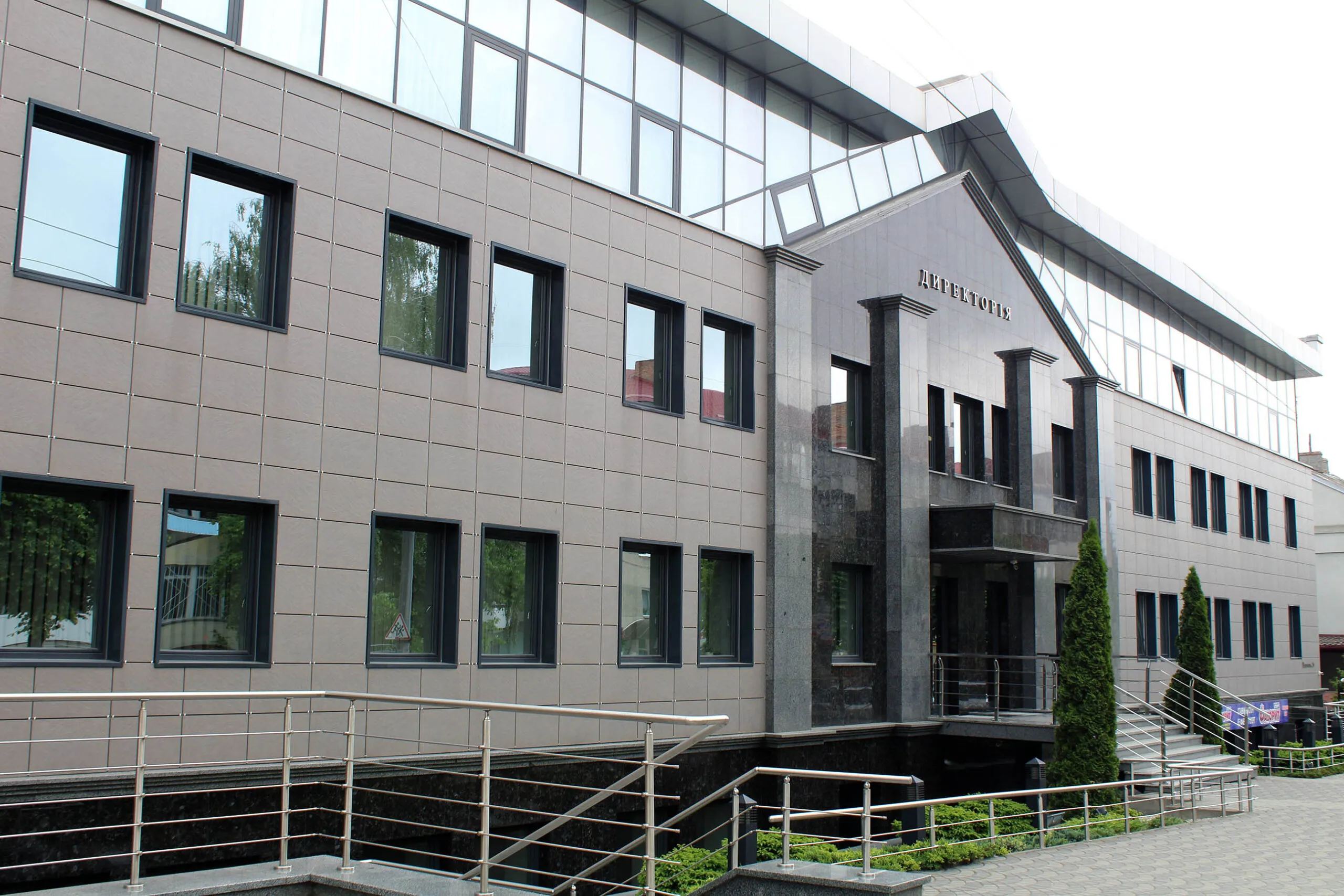
The “Directory” Business Center, located in the heart of Lutsk, offers fully furnished offices ranging from 21 to 186 m² with modern renovations, independent heating and electricity, 24/7 security, and internet access from three providers. Transparent terms, with no hidden fees.


